

Color is often the first thing we notice in a piece of jewelry. A white diamond can feel quietly versatile; a yellow one can light up a neutral outfit; a pink or blue stone can become the detail everyone remembers. The color you love may be a useful clue to your taste, but it is not a personality test. Use the associations below as creative prompts, then let the actual stone, setting, and your own wardrobe make the final decision.
There is a practical side to the story, too. Diamond color can come from trace elements or changes in crystal structure, while a colored gemstone such as ruby or sapphire is a different mineral altogether. Knowing the difference helps you shop for the look you want without confusing a color story with a gemological fact.
In this guide
- Color and character: a useful way to choose
- White, yellow, and pink diamonds
- Blue, green, and the red-stone alternative
- Color comparison at a glance
- Natural, laboratory-grown, and treated color
- How to choose your color
- Frequently asked questions
Color and character: a useful way to choose
Color symbolism is cultural and personal. White is often associated with clarity, yellow with warmth, pink with tenderness, blue with composure, and green with renewal. These are design associations rather than claims about the wearer. Someone who usually dresses in black may choose a yellow diamond for contrast; a person who loves color may still prefer an understated white diamond every day.
Look at a stone in daylight and indoor light, then ask what you want it to do. Should it blend into a collection you already wear, or create a new focal point? A color that feels beautiful in both settings is usually a better choice than one that only makes a striking first impression online.
Gemology also matters. According to the Gemological Institute of America (GIA), diamond color can arise from different atomic-level features. Nitrogen is commonly associated with yellow; boron can produce blue. Pink, red, and green can involve different structural features or exposure histories. The same visual hue does not necessarily have the same origin in every diamond.
White, yellow, and pink diamonds
White: the flexible starting point
A colorless or near-colorless diamond is the easiest choice to repeat. It looks considered with a white shirt, a tailored jacket, or a saturated evening dress. Its visual message is less “traditional” than “open”: it allows shape, cut, and setting to carry the character. A round brilliant reads different from a step-cut stone even when both are white.
If you like a clean jewelry wardrobe, start here. A white diamond also makes a useful companion to stronger colored stones because it supplies sparkle without introducing another hue. Compare white-metal and warm-metal settings in person; the same diamond may look cooler or softer depending on what surrounds it.
Yellow: warmth and optimism
Yellow diamonds move from pale champagne notes to vivid golden color. Their warm appearance can feel cheerful without becoming playful, especially in a restrained pendant or a small pair of earrings. GIA explains that fancy-color diamonds are assessed for hue, tone, and saturation, not simply against the D-to-Z scale used for colorless diamonds.
For styling, repeat the warmth once: a brass-toned button, a cream blouse, or a soft gold accent is enough. Against deep green or navy, yellow becomes a focal point. Against ivory or camel, it feels quieter. Choose the effect you want before choosing the intensity of the stone.
Pink: softness with presence
Pink is often described as romantic, but a pink diamond can also feel modern and self-assured. A cool pale pink in white metal has a crisp look; a warmer blush in yellow gold feels more intimate. Shape changes the mood as much as the hue: a geometric cut keeps pink tailored, while a halo adds more light and detail.
Do not assume all pink diamonds share one cause of color. GIA research notes that natural pink color is commonly linked to changes in crystal structure, while laboratory-grown and treated stones may show different color-producing features. If origin matters to you, read the grading report rather than judging by a photograph.

Blue, green, and the red-stone alternative
Blue: a considered contrast
Blue can feel calm, precise, and a little unexpected in fine jewelry. A deep blue center stone works beautifully with white metal and cool gray clothing, but it can also sharpen the look of cream or tan. A paler blue reads more airy and less formal. For naturally colored blue diamonds, boron is a well-known cause, though GIA notes that more than one mechanism can create blue or blue-gray color.
If your priority is a saturated blue look rather than a diamond specifically, compare blue sapphire as well. Sapphire is corundum, not diamond, and the price, appearance, and care considerations are different. Being clear about the stone lets you choose from a wider, more honest range of designs.
Green: a distinctive, nature-led note
Green brings an earthy point of view to jewelry. In an emerald-cut shape it can feel architectural; in a smaller round stone it can feel like a subtle accent. Natural green diamond color may be associated with radiation-related defects, while other green hues can have different causes. Do not use color alone to infer origin or treatment.
For a stronger green look, emerald is another option. Emerald is beryl, not diamond, and it has different wear and care needs. Think about whether you want the hard sparkle of a diamond, the saturated glow of an emerald, or simply a green accent that fits your daily style.
What about red?
Red is a powerful jewelry color, but ruby should never be presented as a red diamond. Ruby is red corundum. A red diamond is a distinct and exceptionally unusual category; a ruby is often a more realistic way to bring that saturated color into a ring or pendant. If a piece is described as “red gemstone,” ask for the exact gem identity, whether it is natural or laboratory-grown, and whether any treatment is disclosed.
Color comparison at a glance
| Color | Visual mood | Easy styling partner | Ask before buying |
|---|---|---|---|
| White diamond | Clear, versatile | Almost any wardrobe palette | Cut, clarity, setting |
| Yellow diamond | Warm, luminous | Ivory, camel, navy, forest green | Hue and intensity |
| Pink diamond | Soft, distinctive | White, charcoal, warm gold | Origin and color treatment |
| Blue diamond | Cool, composed | Gray, cream, navy | Origin, treatment, report |
| Green diamond | Earthy, uncommon | Black, ivory, warm neutrals | Color origin and treatment |
| Ruby | Bold, saturated red | White, black, muted pink | Ruby identity and treatment |
Natural, laboratory-grown, and treated color
Three separate questions deserve three separate answers: Is the stone a diamond? Was it formed in the earth or grown in a laboratory? Is its color as-grown, naturally occurring, or the result of treatment? A laboratory-grown diamond is a diamond, but its origin must be described accurately. A mined diamond may also have treated color. A colored sapphire or ruby is not a colored diamond.
Ask for the available grading report and product disclosure. GIA notes that reports for colored diamonds describe color grade and, where applicable, color origin. A photograph cannot reliably settle treatment or origin. If a seller uses only a poetic shade name, ask for the actual gem type and any documented treatment before comparing prices.
Color intensity matters as much as color name. “Pink” can range from barely-there blush to a strong rose. Your screen, the product lighting, and the metal setting can shift your impression. Request a daylight video or more than one view for a consequential purchase, and compare stones under similar light.
How to choose a color that stays with you
- Start with what you already wear. Lay your most-worn pieces beside your usual clothing colors. A new stone should either join that palette or create a deliberate contrast.
- Choose a role for the piece. For everyday wear, a small, well-set accent can have more mileage than a large statement stone. For occasions, a vivid center color may be exactly right.
- Check the setting and metal. White metal can make blue and pale pink look crisp; yellow gold can amplify warmth in yellow or blush stones. There is no universal rule, so view the actual combination.
- Confirm the gem identity. Diamond, sapphire, emerald, and ruby differ in appearance, rarity, care, and price. Read the listing rather than relying on a color photograph.
- Keep room for change. You do not need to identify with one color forever. A jewelry collection can contain both a quiet staple and an expressive accent.
Explore the color in real designs: the Sunlit Heart Yellow Diamond Pendant centers a lab-grown yellow diamond, while the Blush Halo Pink Diamond Pendant offers a softer pink direction. Product photographs show the pieces for sale; the editorial images in this guide illustrate color only.
 Sunlit Heart Yellow Diamond Pendant Explore the warm yellow-diamond look. |
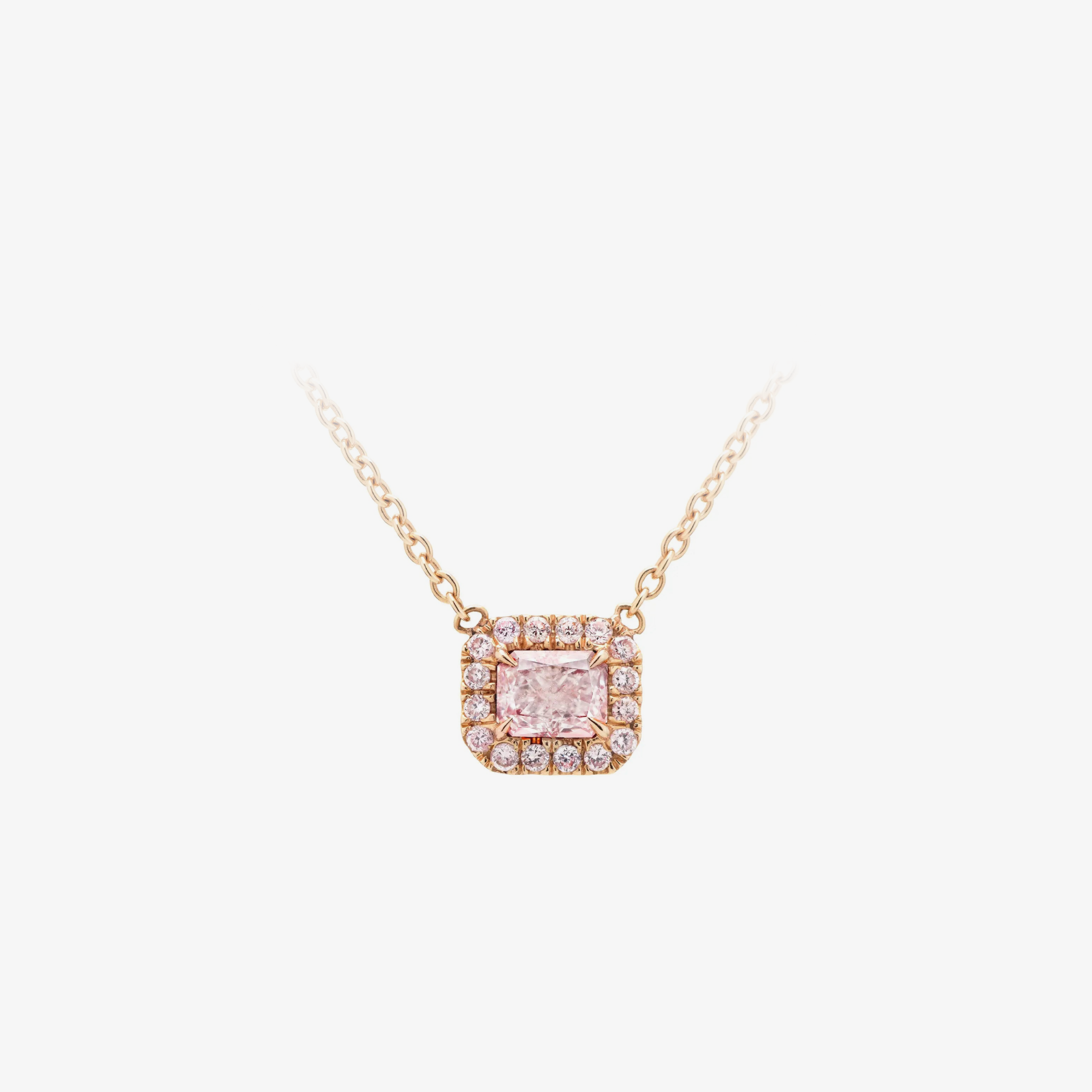 Blush Halo Pink Diamond Pendant Explore a softer pink-diamond look. |
Frequently asked questions
Does my favorite diamond color reveal my personality?
No. Color associations can be a fun way to describe style, but they do not diagnose traits. Your response to a color is more useful than a quiz result.
Is a ruby the same as a red diamond?
No. Ruby is a red variety of corundum; diamond is a different mineral. Ask for the exact stone name on any listing that says only “red gemstone.”
Are laboratory-grown colored diamonds real diamonds?
Yes, laboratory-grown diamonds are diamonds. Their growth origin and any color treatment should be disclosed separately from the color description.
Why can two diamonds called “pink” look so different?
Hue, tone, saturation, cut, lighting, and setting all affect the appearance. Compare photos taken under similar lighting and use a grading report when available.
Which color is easiest to wear every day?
White and near-colorless diamonds are especially flexible, but a small yellow, pink, or blue accent can be equally wearable if it harmonizes with your usual clothes.
The color worth choosing
Choose the color that continues to feel right after the first glance. The best piece is one whose gem identity is clear, whose origin and treatments are disclosed, and whose color works in the light and settings of your real life. Let symbolism inspire you; let the actual stone decide.
Gemological background: GIA Fancy Color Diamond Buyer’s Guide and GIA Gem Characterization.